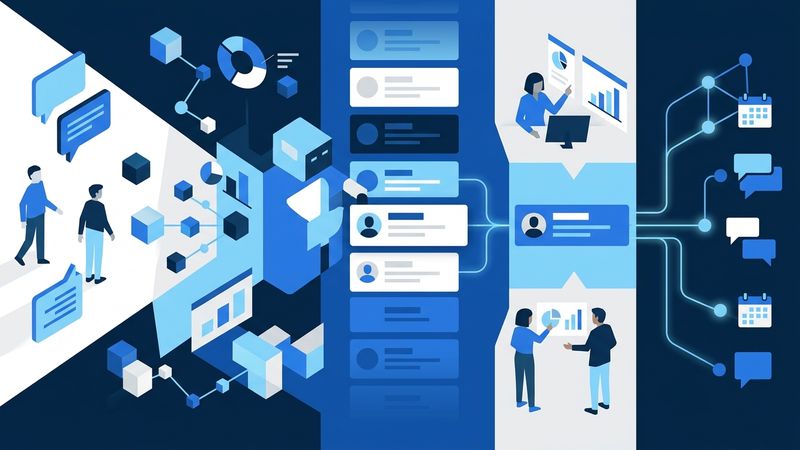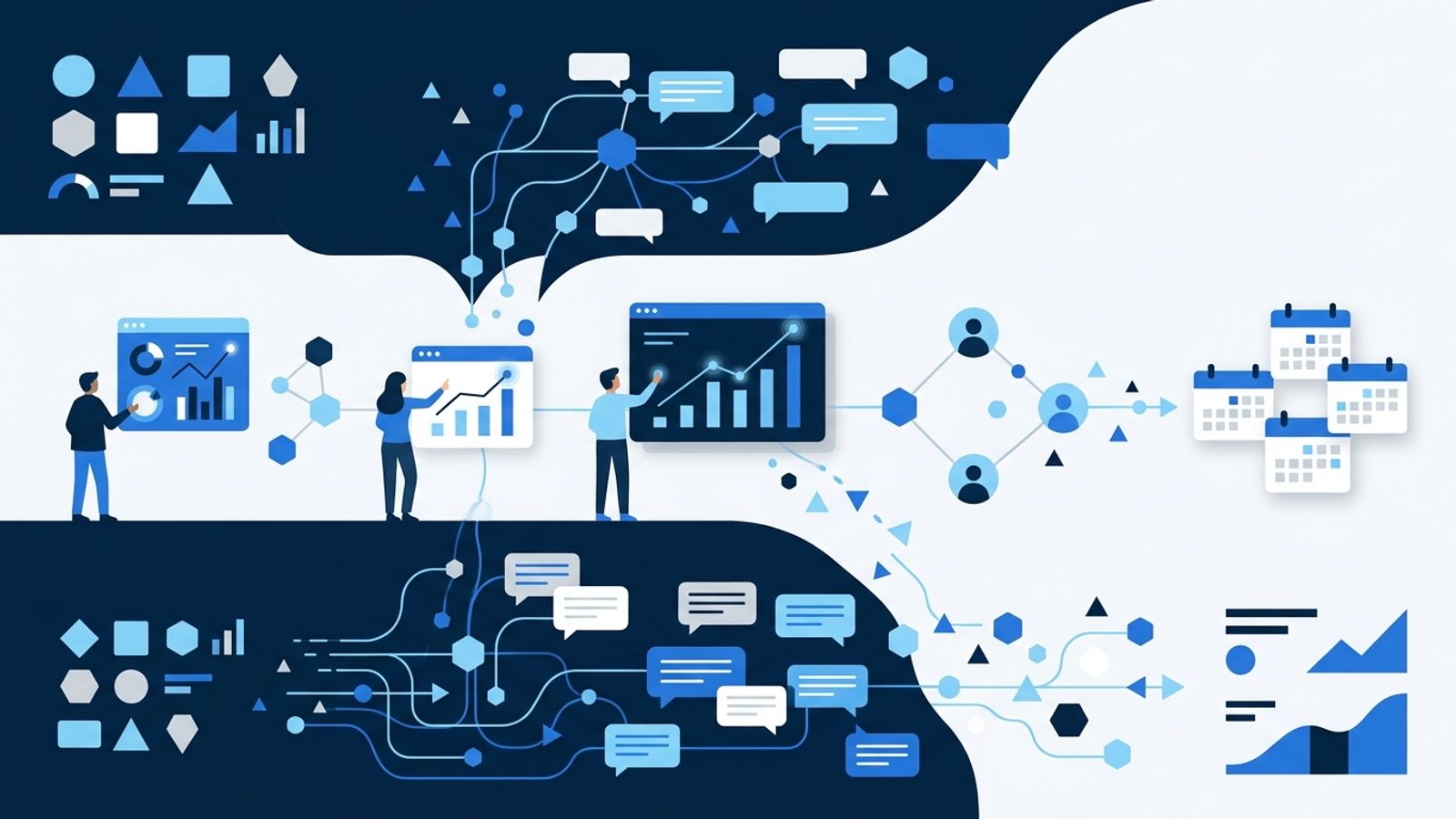
Salesforce announced that Tottenham Hotspur is becoming an “agentic enterprise,” with a new AI agent, Ask Spurs, built on Agentforce. The announcement describes Ask Spurs as a way for fans to get answers about club services. Fans can use it on the club website and app for answers about ticketing, memberships, retail and stadium events. Salesforce reports an 86% engagement rate and says Agentforce alone resolves 20% of interactions.
Engagement isn't retention
Those figures are useful signals about activity and resolution, but they are not repeat-booking measures. Engagement can indicate that people are interacting. Resolution indicates that a question was handled. Neither tells you whether a client booked again.
That distinction matters when you decide whether AI is worth the time and effort. An AI conversation may help someone get an answer without changing what they do next. Treat engagement as an early signal, not proof that you kept a client.
For an appointment-based business, the outcome to watch is a next step that matters to retention: a first-time guest books again, a drifting regular returns or a member continues. A conversation count alone cannot tell you which of those outcomes moved.
Pick a retention outcome
Choose one question before you review an AI assistant’s performance. For example: did a first-visit follow-up help bring that client back? Did an assistant make it easier for a client who has not booked recently to schedule again? Did a conversation support a member’s next visit?
Keep those questions separate. A single engagement score can combine conversations with very different purposes. If you want to improve first-visit follow-up, measure repeat booking for that group rather than combining it with membership activity or outreach to regulars.
Set the repeat-booking window using your own booking history. Then measure whether a client who had an AI-assisted conversation books again within that window. A weekly class and an occasional service need not use the same time frame, so avoid applying a generic cutoff to every service.
Use booking data to measure the outcome
Start with records you already use to run the business: the first appointment date, the next appointment date and a way to recognize the same client across visits. A client ID is a stable label that lets your booking records connect a person’s visits. Add whether an AI-assisted conversation happened and its date if that information is available and appropriate to use.
Your core measure could be the share of eligible clients who book again within the chosen window. You can review that alongside engagement and resolved questions, but keep the measures distinct. That makes it easier to see whether an assistant is answering questions, supporting rebooking or doing both.
If you want to know whether AI-assisted follow-up changed rebooking, use attribution experiments (tests that estimate the effect of a marketing activity). They can help you assess the additional effect on repeat bookings rather than treating every interaction as proof of impact. Don't assume a client would not have booked again without the conversation.
What to do
- Choose one retention moment to measure, such as first-visit follow-up or a drifting regular.
- Set the repeat-booking window from your own booking history.
- Track the next booking separately from engagement and question resolution.
- Use attribution experiments to assess whether AI-assisted follow-up changes that outcome.
For med spas, IV clinics and wellness practices, keep client health and treatment details out of ad platforms and general marketing tools. Privacy rules such as HIPAA may apply, so check requirements before connecting systems.
Vetraeus's Value Attribution service uses attribution experiments to measure real marketing lift. The same approach can help you assess whether AI-supported follow-up contributes to repeat booking.
- appointment-retention
- ai
- rebooking
- marketing-measurement
- value-attribution

Alan Jordan, founder and principal solutions architect. Data engineering, data science and business analytics for appointment-based businesses.