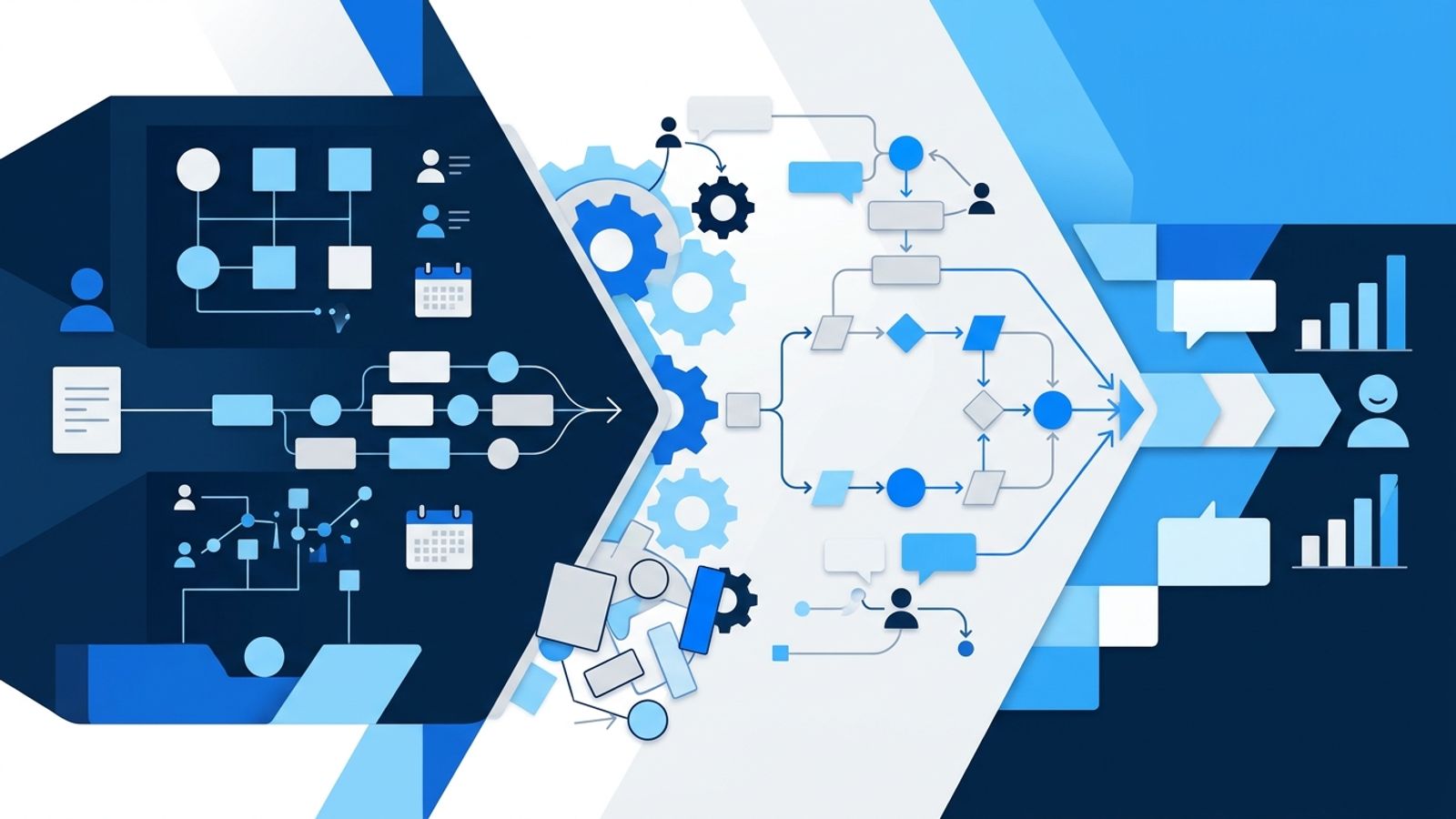
Salesforce’s article warns that an AI agent can finish its task while a review, handoff or change request leaves the wider process waiting. Salesforce says AWS Step Functions workflows can now be exposed as tools AI agents call through Amazon Bedrock AgentCore Gateway. In this setup, the agent decides when to run a workflow and what input to pass while Step Functions executes each step as defined. AWS
Why the handoff matters
For an appointment-based business, the useful question is not whether an agent can send a follow-up message. It is whether the process around that message is clear enough to run reliably. A first-to-second-visit handoff is a practical place to examine: it connects a completed appointment with the next booking opportunity.
Salesforce’s advice is to redesign the full workflow rather than automate a single task in isolation. Salesforce Applied to rebooking, that means deciding who owns follow-up, when it is due, which booking option to offer and what happens if the client does not book. If those steps are unclear, adding automation may simply move the confusion faster.

Map the first-to-second-visit process
Start with the event that begins the follow-up. For example, a first visit is marked complete in your booking system. Then write down the next steps in plain language:
- Who checks whether another appointment is already booked?
- When should follow-up happen, and who is responsible for it?
- What approved rebooking option should the client receive?
- If the client cannot book or does not respond, who takes the next step?
Use booking information to answer only the operational questions needed for that path. That might include whether the appointment is complete, whether another booking exists and whether follow-up is due. Make sure your process respects the client’s communication preferences and your business’s rules for contact.
Also decide what counts as an exception. A booking-system error, a request for advice or a client who needs a different option should go to a staff member, not be left for an agent to guess about. A named owner and a clear next action make these cases easier to spot and resolve.
Automate the clear path, not every decision
Once the steps are defined, identify the repeatable part. For a straightforward case, an automation might check whether a next appointment is recorded and prepare an approved follow-up with a suitable booking option. An agent could help decide when to call that workflow or pass along the necessary input, while fixed steps handle the actions you have already specified. That division follows AWS’s description of agents calling workflows that run as defined. AWS
Keep a person responsible for exceptions and for approving changes to offers or messages. Do not ask an agent to invent a discount, make a clinical recommendation or decide what a client should receive based on sensitive details. The first version should cover a small, repeatable route; add other cases only after you understand who will handle them and how they will be checked.
For med spas, IV and wellness clinics, keep health and treatment details out of ad platforms and general marketing tools. Ask qualified privacy counsel to assess whether HIPAA or other privacy rules apply before connecting client records to an AI workflow.
Measure whether clients come back
Do not judge the process only by how many messages it sends. Track whether first-time clients go on to make another booking within a period you define, whether follow-up happened on time and how often staff had to correct or take over the process. Those measures can show where the handoff still needs attention.
If you are comparing follow-up messages or channels, use attribution experiments to assess whether the work is associated with more rebooking. Avoid assuming a message caused a booking simply because the booking happened afterward. Keep the measure focused on the retention outcome you care about, rather than on activity alone.
What to do
- Write down the first-visit follow-up steps and name an owner for each one.
- Use booking data to identify the simple cases and define what should go to staff.
- Automate only the approved, repeatable path and review its rebooking results.
- applied-ai
- client-retention
- rebooking
- workflow-automation
- appointment-businesses

Alan Jordan, founder and principal solutions architect. Data engineering, data science and business analytics for appointment-based businesses.