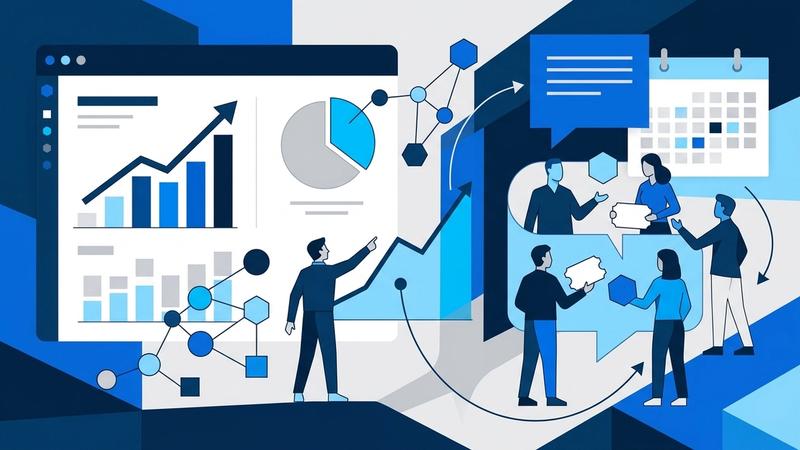
Mindbody has introduced AI Insights, a set of tools built into its Analytics dashboard and powered by Playlist. The suite includes weekly performance summaries plus features called Clients at Risk and Big Spenders.
For an appointment-based business, the useful question is not whether an AI-generated trend looks interesting. It is whether it helps you identify a specific retention opportunity, such as a first-time client who has not booked a second visit.
Treat a risk flag as a prompt
Mindbody describes Clients at Risk as a feature that uses predictive analytics to flag clients who may stop visiting and show the estimated revenue at risk. It runs on the business data already in your Mindbody account.
That can give you a place to start looking. But don’t treat a general risk flag as proof that a client missed a second visit or as an automatic instruction to send a message. Check the person’s actual booking history first. A client who has already booked again needs a different follow-up from someone who came once and has not returned.

Look specifically for the second visit
Use your booking records to narrow the question. Start with clients whose first appointment is complete, then check whether they have booked again. Consider the service they chose and how long it has been since that appointment. Those details help you decide whether a client is outside the return pattern you normally see for that service.
The return window should come from your own business’s booking history, not a single rule applied to every client. A service that people commonly repeat on a short cycle may call for a different follow-up than one clients book less often. If your records do not show a clear pattern, treat the timing as a working assumption and review it as you learn more.
If AI Insights surfaces a broader change in bookings, use it to decide what to inspect next. Then verify whether the trend includes first-time clients who have not rebooked, rather than assuming the feature identifies that exact group. The goal is a useful, specific list for human review—not a label that replaces your knowledge of client relationships.
Make the follow-up relevant
A helpful message should make the next step clear without making the client feel watched. You might check in after a first appointment, offer an easy way to book again or share a relevant membership option if it fits the client’s past choices. Keep the wording personal and appropriate to the relationship, and make it easy for someone to decline further messages.
For med spas, IV clinics and wellness businesses, keep health or treatment details out of ad audiences and general marketing tools. Check whether privacy rules such as HIPAA apply before using client information in outreach. A retention message can be based on booking activity without including sensitive details.
Mindbody also reports that customers using Clients at Risk see a 19% higher client rebooking rate than customers who do not. The company says this reflects average relative lift in its data from January 1 through August 27, 2026. Mindbody says there are no guarantees and results vary.
That is a vendor-reported comparison, not a promise that using the feature or sending a particular message will produce the same result for your business. Use an attribution experiment to assess whether your follow-up is associated with more second bookings. Keep attention on the client outcome, not just whether a prediction or list was generated.
What to do
- Review the clients flagged as at risk and check their actual booking history.
- Identify first-time clients who have not booked again within your usual return window.
- Send a relevant follow-up and use an attribution experiment to assess rebooking.
- Review second bookings and time to rebook to see whether the work is helping.
If you want a clearer view of which client groups drive revenue and why, Vetraeus’s Customer Segmentation work focuses on that question.
- client retention
- customer segmentation
- mindbody
- rebooking
- ai insights

Alan Jordan, founder and principal solutions architect. Data engineering, data science and business analytics for appointment-based businesses.